
EtS Calculator
Estimate your ethyl sulfate (EtS) level after drinking and see how long it may take to clear the common 100 ng/mL reporting cutoff — plus how EtS compares to EtG, the metabolite labs often test alongside it.
Inputs
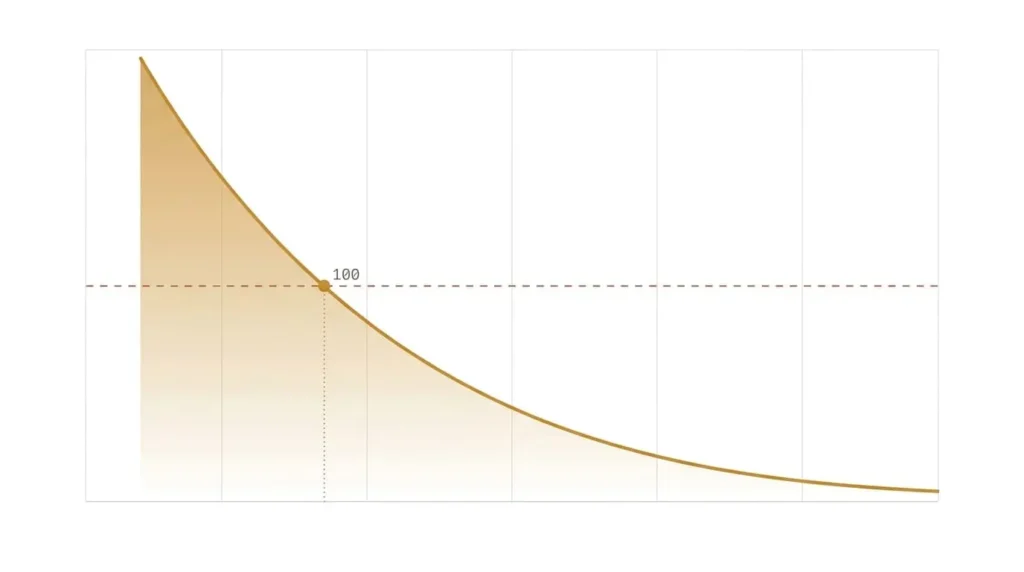
Decay curve
EtG vs EtS — why labs test both
EtG (ethyl glucuronide) and EtS (ethyl sulfate) are both direct, non-oxidative metabolites your liver produces after drinking alcohol — but they aren’t interchangeable, and testing programs often run both together to close each other’s gaps.
EtG
EtS
EtS Calculator: Estimate Your Ethyl Sulfate Level and Detection Window
If your test panel checks for alcohol use, there's a good chance it's not just measuring EtG anymore. Many labs now run EtG and EtS test together, because the two metabolites cover different weaknesses in each other. Our EtS Calculator exists for the same reason our EtG tools do — to turn "how many drinks did I have and when" into a rough estimate of where your ethyl sulfate level probably sits right now, and how much longer it's likely to stay detectable.
This guide covers what the ethyl sulfate calculator actually estimates, what an EtS urine test meaning actually is when it comes back positive, how EtS compares to EtG, and the research behind the 100 ng/mL cutoff most programs use.
Already know your situation involves EtG specifically? Check the EtG Calculator or the EtG Half-Life Calculator instead.
What Is the EtS Calculator?
Ethyl sulfate (EtS) is a direct, non-oxidative metabolite your liver produces when it processes ethanol — chemically distinct from EtG, but formed through a related pathway and tested for the same reason: it's proof of recent drinking that lingers well after the alcohol itself is gone.
The EtS calculator takes the same practical inputs as our other tools — number of drinks, body weight, biological sex, and hours since your last drink — and estimates your peak EtS level, then models how it declines toward the common 100 ng/mL reporting cutoff. Like all of our calculators, it's built to be transparent about being an estimate, not a lab result.
Ets Urine Test Meaning: What a Positive Actually Indicates
An EtS urine test result isn't a yes/no on "did you drink today." It's a concentration, and what that concentration implies depends on the cutoff and, often, what the paired EtG number shows.
Many labs interpret combined EtG/EtS panels roughly like this:
- EtG ≥ 250 ng/mL and/or EtS ≥ 100 ng/mL — considered a positive result under common laboratory reporting standards.
- Higher concentrations (above roughly 1,000 ng/mL) generally point to heavier or more recent drinking.
- Lower positive concentrations can reflect lighter recent drinking, drinking from a day or two prior, or in rare cases incidental exposure to alcohol-containing products.
These interpretation bands vary by lab and program, so if a real test result matters for your situation, the number itself matters less than what your specific testing program's policy says about it.
EtS vs EtG Test: What Actually Differs
People often assume EtG and EtS are just two names for the same thing. They're not — they're separate metabolites with different chemical behavior, and that difference is the entire reason labs bother running both.
Stability. EtG can be broken down by certain bacteria if a urine sample sits around without proper refrigeration — which can pull a genuinely positive sample down toward a false negative. EtS is far more chemically stable and largely resistant to this kind of bacterial degradation.
Sensitivity to dilution. Both markers are affected by how concentrated or dilute a urine sample is, but EtG is generally considered more dilution-sensitive in practice, which is part of why a low EtG reading alongside a positive EtS can still indicate recent drinking.
Cutoff and reporting. EtG is commonly reported against multiple thresholds (100 / 300 / 500 ng/mL depending on the program), while EtS is most often reported against a single 100 ng/mL cutoff.
Detection window. The two markers largely overlap, but EtS has been observed to remain detectable slightly longer than EtG in some cases — one controlled drinking study directly comparing the two markers after a single ethanol dose found EtS could still be measured after EtG had already dropped out of range for some participants (Høiseth et al., 2008, Alcohol & Alcoholism).
This is exactly why EtG and EtS test together in most modern panels — a result that's negative on one marker but positive on the other is one of the main reasons dual testing became standard rather than optional.
Ets Detection Time: How Long Does It Actually Last?
For a single, moderate dose of alcohol, EtS is typically detectable in urine somewhere in the range of 24 to 48 hours. After heavier drinking, repeated drinking over a session, or in people who metabolize more slowly, that window can extend further — published research and clinical lab guidance describe detection windows stretching toward several days in higher-consumption scenarios.
Research comparing EtG, EtS, and other alcohol biomarkers after a controlled single dose found meaningful excretion of both metabolites continuing well into the second day post-consumption, with individual variation in exactly when each marker dropped below assay sensitivity (Høiseth et al., 2008). Clinical assay documentation on paired EtG/EtS testing has similarly noted that combined interpretation, rather than either marker alone, gives a more complete picture of the timing and intensity of drinking (Jatlow et al., 2014, Alcoholism: Clinical and Experimental Research).
Because detection time depends heavily on dose and individual metabolism, a flat "X hours per drink" rule doesn't hold up well — which is the whole reason the calculator above models your specific inputs instead of quoting one number for everyone.
Ets Cutoff Level 100 ng/mL — Why This Specific Number
The 100 ng/mL threshold for EtS shows up so often because it sits at a sensitivity level that can catch light-to-moderate recent drinking without being so sensitive that incidental environmental exposure regularly triggers a positive. Combined-marker lab protocols frequently define a positive result as EtG at or above 250 ng/mL or EtS at or above 100 ng/mL — meaning EtS can independently trigger a positive determination even when the EtG number looks lower.
If your specific testing program uses a different EtG threshold, our other calculators can help you check that side of the picture directly: ETG 100 ng/mL Calculator, ETG 200 ng/mL Calculator, EtG 300 ng/mL Calculator.
How to Use the Ethyl Sulfate Calculator
- Enter your number of standard drinks (12oz beer, 5oz wine, or 1.5oz spirits ≈ 1 standard drink).
- Enter your body weight — this affects how alcohol is distributed and your estimated starting concentration.
- Select your biological sex — body water percentage differs and affects the estimate.
- Move the "hours since last drink" slider to see your estimated current EtS level and the time remaining until it's projected to fall below the 100 ng/mL cutoff.
The chart shows your estimated decay curve against the cutoff line, and the readout panel translates that into a plain-language time estimate.
Frequently Asked Questions
Is EtS more accurate than EtG? Neither marker is strictly "more accurate" — they measure different things and have different strengths. EtS's main advantage is greater chemical stability in the sample itself, not necessarily greater sensitivity to alcohol consumption.
Can EtS be positive while EtG is negative? Yes. Because the two metabolites clear at somewhat different rates and have different sample stability, it's possible for results to diverge, which is a core reason labs run both.
What's a "normal" EtS detection window? For a single moderate drinking episode, roughly 24–48 hours is typical, though heavier or repeated drinking can extend this toward several days depending on individual metabolism.
Does the EtS calculator replace a lab test? No. It's an educational estimate based on generalized modeling, not a diagnostic tool, and cannot predict the outcome of an actual laboratory result.
Why does EtS have a lower cutoff than EtG? EtS is generally produced in smaller quantities than EtG relative to the amount of alcohol consumed, so testing protocols set its reporting threshold lower to maintain comparable sensitivity between the two markers.
Sources
- Høiseth G, Nilsson GH, Bergström J, et al. Comparison between the urinary alcohol markers EtG, EtS, and GTOL/5-HIAA in a controlled drinking experiment. Alcohol and Alcoholism, 2008. PubMed
- Jatlow PI, Agro A, Wu R, et al. Ethyl glucuronide and ethyl sulfate assays in clinical trials, interpretation, and limitations: results of a dose ranging alcohol challenge study and 2 clinical trials. Alcoholism: Clinical and Experimental Research, 2014.
- University of Washington Laboratory Medicine — Ethyl Glucuronide Screen with Reflex, Urine, test reference guide.
- National Institute on Alcohol Abuse and Alcoholism (NIAAA)
- SAMHSA
Related Tools
- ETG Calculator
- Advanced ETG Calculator
- EtG Half-Life Calculator
- ETG 100 ng/mL Calculator
- EtG 300 ng/mL Calculator
Learn More
Educational estimate only. This calculator and article model generalized elimination patterns based on published research and do not predict the result of a certified laboratory test. This is not medical, legal, or professional advice — consult a qualified professional or certified testing laboratory for anything that depends on an actual test outcome.