
If you’ve come across the term “EtG” on a court order, a probation form, or a lab report, it can feel like unfamiliar territory at a stressful moment. EtG stands for ethyl glucuronide, and understanding what it measures — and what it doesn’t — can make the difference between reading a result correctly and misinterpreting something that affects your legal standing, your job, or your recovery plan.
This guide walks through what EtG actually is, how testing works, what the numbers mean, and where people commonly get tripped up.
This article is for general educational purposes and isn’t a substitute for medical or legal advice. If you’re facing a specific testing requirement, talk to your provider, attorney, or program administrator about how results will be interpreted in your case.
What Is EtG?
EtG is a direct metabolite of ethanol — the alcohol found in beer, wine, and spirits. When you drink, your liver processes most of the ethanol through oxidation, but a small fraction (less than 1%) is instead converted into ethyl glucuronide through an enzyme called UDP-glucuronosyltransferase (UGT). This byproduct is then excreted through urine, and it also shows up in hair, blood, and other tissues.
What makes EtG different from a breathalyzer or blood alcohol test is timing. A breath or blood test measures active alcohol in your system, which clears within a matter of hours. EtG, on the other hand, stays measurable for much longer — commonly up to 80 hours in urine after heavier drinking, and up to 90 days in hair. That extended window is exactly why EtG has become the go-to tool anywhere someone needs to confirm abstinence, not just sobriety at a single moment.
Labs often test EtG alongside a companion metabolite called EtS (ethyl sulfate). Testing both together helps confirm that a positive result actually came from drinking alcohol, rather than from an unrelated source of trace ethanol exposure.
Why EtG Testing Matters
Traditional alcohol tests answer one question: are you intoxicated right now? EtG answers a different one: did you drink at some point in the recent past? That distinction matters enormously in situations where ongoing abstinence — not momentary sobriety — is the requirement.
It’s also why EtG carries more weight, and more scrutiny, than older testing methods. Because it’s sensitive enough to pick up very small amounts of alcohol exposure, it can occasionally flag things that aren’t actually drinking, which we’ll get into shortly.
Who Uses EtG Testing
EtG testing shows up across a range of settings, each with a different reason for requiring it:
- Family courts — verifying sobriety during custody proceedings
- Probation and parole programs — monitoring compliance with court-ordered abstinence
- Addiction treatment programs — tracking patient progress and catching undisclosed relapses
- Employers in safety-sensitive industries — post-incident or random workplace testing
- Liver transplant programs — screening candidates before and after transplant
- Individuals in recovery — using testing as a personal accountability tool
If your situation only requires proof that you’re not currently impaired — say, before getting behind the wheel — a breathalyzer is faster and more appropriate. EtG is built for a longer lens.
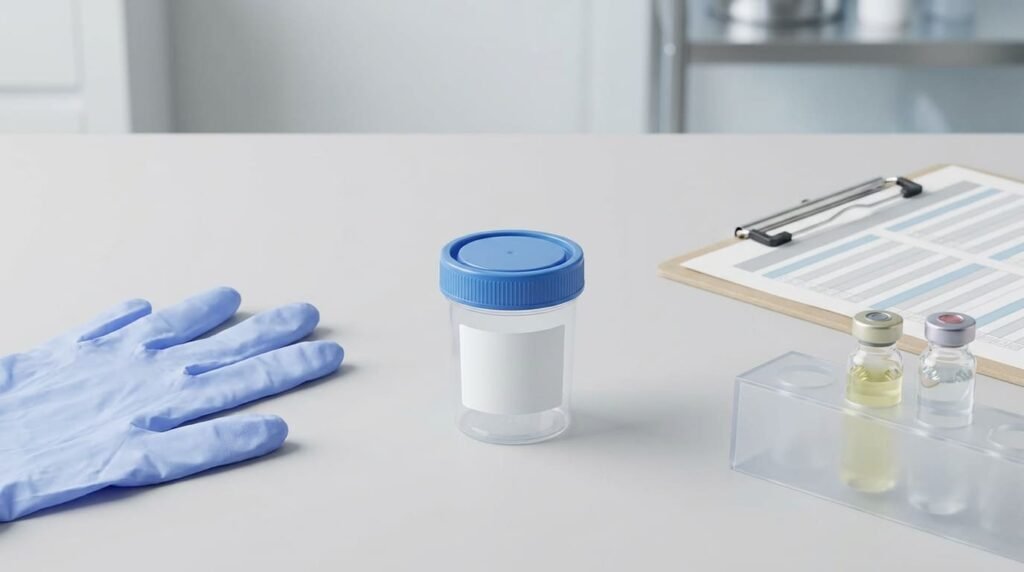
How EtG Testing Works
The testing process generally follows a consistent path, regardless of setting:
- Sample collection — usually urine, though hair, blood, or nail samples are used depending on the required detection window. Court and workplace testing often involves observed collection to preserve chain of custody.
- Initial screening — an immunoassay test checks whether EtG is present above a set threshold.
- Confirmatory testing — positive screens are typically re-checked using liquid chromatography-tandem mass spectrometry (LC-MS/MS) or gas chromatography-mass spectrometry (GC-MS), both far more precise than the initial screen.
- Interpretation against a cutoff — the measured EtG level (in nanograms per milliliter) is compared to the cutoff used by that particular program.
- Reporting — results go to whoever ordered the test, along with documentation confirming the sample wasn’t tampered with.
EtG Detection Windows by Sample Type
Detection time depends heavily on how much alcohol was consumed and which sample type is used.
| Sample Type | Typical Detection Window | Best Suited For |
|---|---|---|
| Urine | 24–80 hours, depending on amount consumed | Recent-use monitoring, frequent testing |
| Hair | Up to ~90 days | Long-term pattern of use or abstinence |
| Blood | Roughly 24–36 hours | Precise, short-window clinical or forensic use |
| Saliva | 12–24 hours | Very recent use, rapid screening |
| Nails | Weeks to months | Alternative to hair when unavailable |
A widely repeated figure is that EtG is an “80-hour test.” That’s accurate for heavier drinking, but it’s an upper bound, not a default. After one or two drinks, most people fall below a standard cutoff within 24 to 48 hours. The amount consumed — not a fixed rule — is what really drives the detection window.
Because so many variables affect that window — amount consumed, body weight, hydration, and the cutoff your program uses — it can help to run your own numbers rather than rely on a general table. The EtG calculator lets you enter your specific drinking details and get a personalized estimate of how long EtG might remain detectable, which is a useful starting point before a scheduled test.
EtG Levels and Cutoffs Explained
There’s no single universal EtG cutoff. Different programs set different thresholds, which is part of why the same test result can be read as negative in one context and positive in another.
| EtG Level (Urine) | General Interpretation |
|---|---|
| Below ~100 ng/mL | Typically treated as negative |
| 100–500 ng/mL | Gray zone — possible light drinking or incidental exposure |
| 500–1,000 ng/mL | Commonly treated as positive for recent drinking |
| Above 1,000 ng/mL | Suggests heavier or more recent alcohol use |
The U.S. Substance Abuse and Mental Health Services Administration has recommended a 500 ng/mL cutoff specifically to reduce false positives tied to incidental alcohol exposure, while stricter programs — particularly those requiring zero-tolerance abstinence — often use a lower threshold closer to 100 ng/mL. It’s worth asking directly which cutoff your program applies, since that single detail changes how a borderline result should be read.
One important caveat: a higher EtG number doesn’t tell you exactly how much alcohol was consumed. It reflects a combination of amount and timing, not a precise drink count.
There’s no single universal EtG cutoff — different programs set different thresholds, which is part of why the same result can be read as negative in one context and positive in another. The SAMHSA advisory on alcohol biomarkers specifically recommends a 500 ng/mL cutoff to reduce false positives tied to incidental alcohol exposure, while stricter zero-tolerance programs often apply a lower threshold closer to 100 ng/mL. It’s worth asking directly which cutoff your program uses, since that single detail changes how a borderline result should be interpreted.
EtG Half-Life: How Fast It Clears
EtG has a relatively short half-life of around 2 to 3 hours, meaning your body clears half of what’s present roughly every couple of hours. Despite that, it remains detectable well after ethanol itself has left your system, because your body keeps producing and excreting it for a stretch of time after your last drink.
Several factors influence how quickly it clears:
- Amount consumed — more alcohol means higher EtG levels and a longer window
- Liver function — a healthy liver processes and clears EtG faster
- Hydration — heavy fluid intake dilutes urine, which can lower measured levels (and, taken to an extreme, can flag a sample as diluted)
- Individual metabolism — some people naturally process ethanol and its byproducts faster than others
How Accurate Is EtG Testing?
When run through a certified lab with LC-MS/MS confirmation, EtG testing is considered highly sensitive — capable of detecting even light, recent drinking. Sensitivity for confirmed lab testing commonly falls in the 70–90%+ range depending on the cutoff and how recently alcohol was consumed, though exact figures vary across studies and testing conditions.
Accuracy drops with over-the-counter test strips, which lack the sensitivity and specificity of laboratory-grade methods. If a result carries real consequences — legal, custodial, or employment-related — confirmatory lab testing matters far more than a quick screen.
False Positives: What Actually Causes Them
Because EtG testing is so sensitive, it can pick up trace ethanol from sources that have nothing to do with drinking. Common triggers include:
- Alcohol-based hand sanitizer, including from repeated use or passive exposure
- Mouthwash and breath sprays
- Certain cosmetics, perfumes, and aftershaves
- Fermented foods and drinks, such as kombucha or vinegar-heavy dishes
- Some cough syrups and cold medications
To reduce this risk before a scheduled test, it helps to switch to alcohol-free personal care products, disclose any medications to the testing administrator, and ask whether the lab confirms results with EtS testing alongside EtG — combined testing meaningfully lowers the odds of a false positive being taken at face value.
EtG vs. Breathalyzer vs. PEth
Choosing the right test comes down to what you actually need to prove.
| Test | Detection Window | What It Measures | Typical Use |
|---|---|---|---|
| Breathalyzer | 1–2 hours | Current blood alcohol level | Roadside checks, immediate intoxication |
| Blood Alcohol Test | Several hours | Current BAC | Medical or legal intoxication assessment |
| EtG (urine) | Up to ~80 hours | Alcohol metabolite | Short-term abstinence monitoring |
| EtG (hair) | Up to ~90 days | Alcohol metabolite | Long-term pattern monitoring |
| PEth (blood) | 2–4 weeks | Alcohol biomarker (phosphatidylethanol) | Chronic use assessment, less prone to incidental false positives |
If your goal is confirming you’re not currently impaired, a breathalyzer does the job. If you need to demonstrate abstinence over recent days, urine EtG fits. For proving a longer pattern — say, months of sobriety — hair EtG or PEth are better suited, with PEth often preferred in clinical settings because it’s less sensitive to incidental exposure.
Which EtG Test Should You Choose?
A simple way to think through it:
- Need to confirm the last few days? Urine EtG is the standard, affordable option.
- Need to prove months of sobriety? Hair EtG offers the longest window and is harder to influence in the short term.
- Need clinical-grade precision over a short window? Blood EtG, though more invasive, offers tighter accuracy.
- Hair unavailable or unsuitable? Nail EtG is a less common but workable alternative.
- Worried about false positives? Ask specifically whether EtS confirmation is part of the process — it’s one of the simplest ways to add reliability to a result.
Common Mistakes to Avoid
- Treating EtG as a measure of how much someone drank, rather than whether they drank at all
- Not asking which cutoff level a program uses before assuming a result is “safe” or “failing”
- Relying on a screening-only result for high-stakes decisions without requesting LC-MS/MS confirmation
- Assuming hair and urine tests are interchangeable, when they actually answer different questions
- Overlooking everyday products — mouthwash, sanitizer, certain foods — as realistic sources of a low-level positive
EtG Testing Around the World
While much of the published guidance on cutoffs and protocols comes from U.S. bodies like SAMHSA and the Department of Transportation, EtG testing itself is used internationally in courts, treatment programs, and workplaces. Exact cutoff levels, which labs are accredited to run confirmatory testing, and how heavily EtG evidence weighs in legal proceedings can all vary by country. If you’re being tested outside the U.S., it’s worth confirming with the requesting authority which standard applies in your case, since guidance isn’t uniformly standardized across jurisdictions.
Pricing follows a similar pattern — a urine EtG test commonly falls somewhere in the tens to low hundreds of dollars (or local currency equivalent), while hair testing tends to cost more due to more complex lab processing. Costs vary by country, provider type, and whether a court or employer is covering the fee directly.
FAQs
What does a positive EtG test mean? A positive result means ethanol was metabolized and detected within the test’s window — it confirms alcohol exposure occurred, not necessarily how much was consumed or exactly when.
How long does EtG stay in urine? Typically 24 to 80 hours, depending on how much alcohol was consumed. Light drinking often clears a standard cutoff within a day or two; heavier drinking can extend closer to the 80-hour mark.
Can EtG testing detect a single drink? Yes. EtG is sensitive enough to detect even one standard drink, particularly at lower cutoff thresholds like 100 ng/mL, which is part of why incidental exposure can also trigger a positive.
Does mouthwash cause a false positive EtG result? Alcohol-based mouthwash can contribute to a low-level positive, especially if used close to the time of testing. Switching to an alcohol-free product beforehand reduces that risk.
Is EtG testing accurate? It’s highly sensitive, especially when confirmed with LC-MS/MS. Its main limitation isn’t accuracy in detecting exposure — it’s that it can’t reliably tell you how much alcohol was consumed or precisely when.
What’s the difference between EtG and EtS? EtG and EtS are both direct metabolites of ethanol, but labs often test them together because a confirmed EtS result helps rule out non-drinking sources of trace ethanol, making a positive EtG finding more reliable.
Who typically requires EtG testing? Family courts, probation and parole programs, addiction treatment providers, and employers in safety-sensitive roles are the most common parties requiring EtG testing.
How is EtG different from PEth testing? EtG detects alcohol exposure over hours to days (urine) or months (hair), while PEth is a blood-based marker generally used to assess alcohol use over the preceding 2 to 4 weeks, with somewhat lower susceptibility to incidental false positives.
Conclusion
EtG testing exists to answer a question breath and blood tests can’t: not just “are you intoxicated right now,” but “did you drink recently at all.” That extended window makes it a valuable tool for courts, employers, and treatment programs, but it also means results deserve careful reading rather than a simple pass/fail assumption.
If you’re facing an EtG test, the most useful things you can do are straightforward: understand which cutoff applies to your situation, avoid alcohol-based personal care products beforehand, and ask about EtS confirmation if a result seems questionable. And if a result is ever in dispute, requesting LC-MS/MS confirmatory testing is the clearest way to get an accurate answer rather than relying on an initial screen alone.
1 thought on “What Is EtG? Ethyl Glucuronide Testing, Detection Times & Accuracy Explained”